November 18, 2026
Estimated Read Time: 6 Minutes
Table of Contents
1. A 200-Year-Old Goan Home Finds a New Purpose2. What Makes Traditional Goan Architecture Worth Preserving?
3. The Challenges of Restoring a Heritage Home
4. Bringing Modern Comfort Into a Historic Home
5. Experiencing Maravilha's Heritage Today
6. Why Preserving Goan Heritage Homes Matters
7. Frequently Asked Questions
Key Takeaways
- Restoring a 200-year-old Goan home involves preserving its architectural identity while adapting it for modern use.
- Traditional Goan houses feature high ceilings, sloping tiled roofs, shaded verandahs and construction techniques influenced by the local climate.
- Maravilha in Assagao is a restored 200-year-old residence formerly owned by Goan landlord Francisco Xavier Saldanha.
- Today, Maravilha combines its heritage character with 14 guest rooms, contemporary comforts, a swimming pool, landscaped gardens and facilities for private group stays.
A 200-year-old Goan home carries a history that goes well beyond its architecture. Generations have lived within its walls, gathered on its verandahs, shared meals in its dining rooms and watched village life unfold through its windows. Every architectural detail reflects something about the people who built and occupied it, from their craftsmanship and traditions to the way they responded to Goa’s tropical climate.
Restoring such a home is a careful balance between preservation and change. The building must retain the qualities that make it distinctive while becoming comfortable and practical for modern use. At Maravilha, our restored heritage home in Assagao, North Goa, this relationship between the past and present remains central to the experience we offer guests today.
A 200-Year-Old Goan Home Finds a New Purpose
Before becoming Maravilha, the property was the residence of Mr Francisco Xavier Saldanha, a Goan landlord. Dating back approximately two centuries, the house belongs to a period when substantial family residences were an important part of Goa’s village landscape. Many surviving Portuguese homes in Goa reflect this architectural tradition, shaped by European influences, local materials and the craftsmanship of Goan artisans.
These homes were designed around family and community life. Spacious rooms accommodated large households, shaded verandahs offered places for conversation, and shared dining spaces formed an important part of everyday living. Architecture was both expressive and practical, with decorative features existing alongside elements that helped make the interiors suitable for the climate.
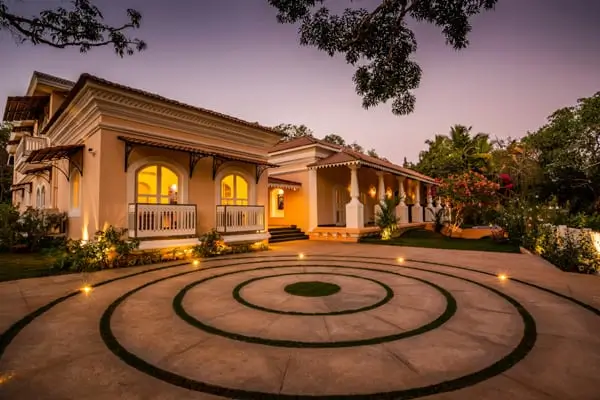
Maravilha retains much of this residential character through its arched entrance, pillared verandahs, decorative details and generous interior proportions. Its distinctive colour palette and vintage-inspired furnishings complement the architecture, allowing the property’s heritage identity to remain visible. The name Maravilha, derived from the Portuguese word for ‘marvellous’, marks the home’s transformation into a boutique hospitality destination while acknowledging its remarkable past.
What Makes Traditional Goan Architecture Worth Preserving?
The appeal of Goan architecture lies in the relationship between its visual character, everyday functionality and surrounding environment. Traditional houses were built using materials and techniques suited to the region’s climate, long before modern air conditioning and construction systems became commonplace.
Several architectural features contributed to their distinctive appearance and practical design.
Laterite Stone and Traditional Building Materials
Laterite has long been associated with Goa’s traditional buildings because of its local availability and suitability for construction. Older houses also commonly used lime-based mortars and plaster, which behave differently from many contemporary building materials. These traditional construction systems require particular care during restoration, especially when dealing with moisture and ageing masonry. Using incompatible repairs can interfere with how older walls absorb and release moisture, potentially contributing to deterioration over time.
High Ceilings and Sloping Terracotta Roofs
High ceilings are among the most recognisable features of traditional Goan homes. Their proportions allow warm air to rise above the occupied part of a room, while sloping terracotta-tiled roofs help direct heavy monsoon rainfall away from the structure. Roof overhangs and shaded openings also contribute to protection from the elements. Together, these details demonstrate how practical building considerations influenced the architectural identity of older Goan residences.
Verandahs, Balcãos and Outdoor Living
The traditional Goan balcão, or covered front porch, was an important social space where families welcomed visitors, interacted with neighbours and observed village life. Verandahs served a similar purpose, creating a comfortable transition between indoor rooms and the outdoors. At Maravilha, these spaces remain part of the property’s everyday experience. Guests can enjoy the garden views, spend time reading or gather for conversations in surroundings that retain the welcoming atmosphere of a family home.
The Challenges of Restoring a Heritage Home
Restoring an old home requires a different approach from renovating a contemporary building. Two centuries of exposure to changing weather conditions, humidity and Goa’s heavy monsoons can affect roofing, timber, wall finishes and structural elements. Before restoration decisions are made, the condition of the existing building must be understood, including which features can be retained, which require careful repairs and which may need replacement.
The materials used during restoration are particularly important. Older masonry, timber and traditional finishes may require specialised treatment to ensure repairs remain compatible with the original structure. The objective is not necessarily to preserve every ageing component, but to retain historically significant features wherever practical and ensure that necessary interventions respect the building’s construction.
There is also the question of preserving visual character. Arched doorways, decorative railings, wooden detailing, traditional floor patterns and the proportions of individual rooms all contribute to a heritage home’s identity. Replacing these elements indiscriminately can leave an old building looking like a modern interpretation of its former self. At Maravilha, the restored setting retains the architectural language of a traditional Goan residence, complemented by a palette of pale peach, white, terracotta and indigo. Vintage-inspired furnishings, decorative lighting and carefully considered interiors contribute to the home’s present-day character without overwhelming its historical setting.
Bringing Modern Comfort Into a Historic Home
Preserving architectural heritage is only one part of adapting an old residence for hospitality. The building must also accommodate the practical expectations of today’s travellers, including comfortable bedrooms, reliable cooling, functional bathrooms, convenient electrical systems and contemporary amenities. Introducing these features into an older structure requires consideration of the existing layout and architectural details.
A heritage home was not originally designed to accommodate modern plumbing, air conditioning or contemporary bathroom fittings. Integrating these systems can therefore involve compromises between technical requirements and preservation. The challenge is to ensure that modern additions support the building’s new purpose without becoming visually dominant or changing the character of its most important spaces.
At Maravilha, our 14 guest rooms bring together the atmosphere of a restored residence with air conditioning, Wi-Fi, modern bathrooms and comfortable accommodation. Heritage-inspired tiles, decorative furnishings and traditional architectural elements complement the contemporary fittings, allowing guests to appreciate the historic surroundings while enjoying familiar conveniences. Selected room categories also feature additional comforts, including bathtubs.
The result is accommodation that retains a connection to the property’s past while functioning as a contemporary boutique stay. Guests can experience the character of an older Goan home without having to compromise on the essential comforts expected from quality hospitality.
Experiencing Maravilha’s Heritage Today
One of the most meaningful aspects of heritage restoration is the opportunity to continue using spaces that have existed for generations. At Maravilha, the property’s original residential character remains evident in its generous common areas, shaded verandahs and relationship with the surrounding gardens. The dining room provides a setting for shared meals, while the outdoor spaces and swimming pool offer opportunities to unwind throughout the day.
With 14 rooms, Maravilha offers a more intimate hospitality experience than a large resort, while providing the accommodation capacity and shared facilities suited to guests travelling together. The rooms retain a connection to the property’s architectural identity, with different outlooks towards the gardens and pool. For travellers exploring heritage villas in Goa, this combination of historic surroundings and modern hospitality offers an opportunity to experience a traditional residence as part of their holiday.
The property also lends itself to family gatherings, reunions and private group stays. Guests can enquire about exclusive-use arrangements, allowing family members or friends to stay together within the estate while enjoying individual bedrooms and communal spaces. Private dining arrangements and poolside gatherings can also be discussed with the team, depending on the occasion and booking requirements.
Assagao adds another dimension to the experience. Known for its leafy village roads, older residences, cafés and restaurants, the area offers a different perspective on North Goa beyond its busy coastal destinations. Guests can explore nearby attractions and return to the surroundings of a restored home that remains connected to the village’s residential heritage.
What distinguishes Maravilha from many contemporary boutique villas in Goa is not simply its architectural styling, but the history of the residence itself. The house existed long before it became a hospitality property, and that identity continues to shape the experience of staying here.
Why Preserving Goan Heritage Homes Matters
Traditional homes are an important part of Goa’s architectural and cultural identity. Their construction methods, decorative features and spatial arrangements reveal how earlier generations lived, responded to their environment and expressed their traditions. The history of Portuguese homes in Goa also reflects a broader exchange of architectural influences, interpreted through local materials, building practices and craftsmanship.
When these properties disappear, the loss extends beyond their physical structures. Traditional construction knowledge, regional design features and evidence of earlier domestic life can become harder for future generations to understand. Preserving these buildings therefore contributes to maintaining a visible connection with Goa’s past.
Adaptive reuse, where an older building is given a new purpose, offers one way to support its continued existence. Converting a historic residence into accommodation can help keep the property economically viable while allowing visitors to experience its architecture. However, the long-term value of this approach depends on responsible maintenance, sensitive improvements and respect for the building’s original character.
Maravilha represents one such transition. What was once a private Goan residence now welcomes travellers, families and groups, allowing the property to remain in use while introducing its heritage to a wider audience. For guests interested in architecture, culture and design, staying in a restored home offers an opportunity to experience those qualities through everyday spaces rather than simply viewing them from outside.
Preservation gives an old home the opportunity to begin another chapter without losing its connection to the generations that came before it.
Discover the Heritage of Maravilha in Assagao
A restored home offers something that cannot be recreated through design alone. Its architecture, proportions and surroundings carry the influence of the people who built and lived within it, giving every space a character shaped over time.
At Maravilha, we invite guests to experience this part of Goa’s architectural heritage while enjoying the comfort and convenience of contemporary hospitality.
Explore our rooms, discover the property and plan your heritage stay at Maravilha.
⭐⭐⭐⭐⭐ Shivam, Tripadvisor
“We had a fabulous time! Great property, better service. We booked the property for a family get together of 30 people. We were a diverse group from grandparents 88 years old, to toddlers 6 months old, and everyone had a wonderful time. The property was amazing, rooms were nice, clean, and the pool was great too. The staff was excellent, very responsive and helpful.”

